

Create Living Rituals
#Law 37: Emergent Laws of Regenerative Power

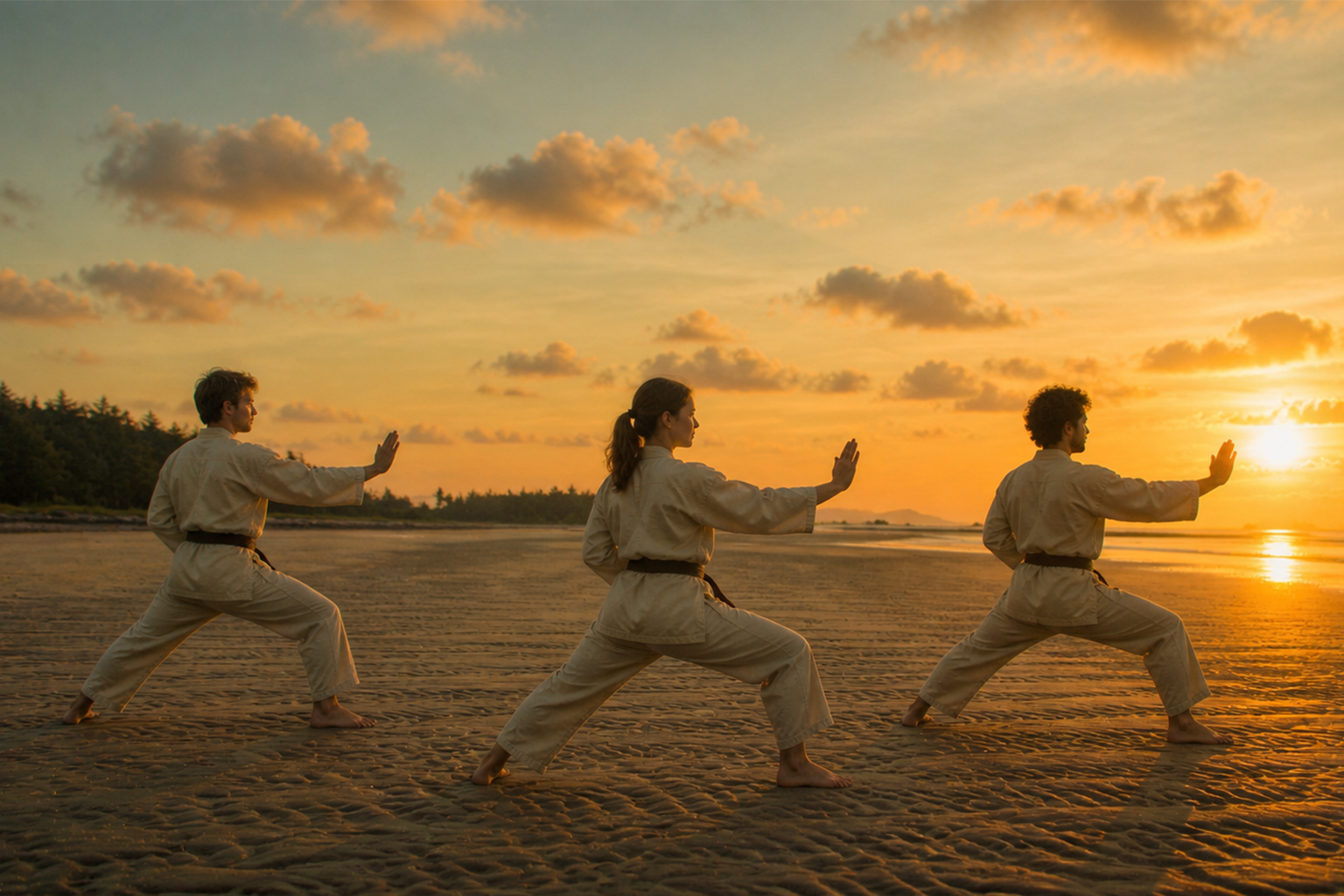
The rituals that remember us
Each morning, before the day gathers speed, I enter a small ritual of poetry.
My home study faces the corner of a suburban street. A frangipani presses its green abundance against the windows. My A4 ledger opens on the desk. The date goes at the top. A thin column is drawn down the right-hand side for notes, fragments, sparks and unexpected arrivals. A blue 2B clutch pencil rests in my hand.
Taiko drumming begins.
The vibration moves through ribs and spine, waking the body before the mind has fully arrived. I close my eyes and step inward, into the sacred circle of my poetry practice. I do not force a poem into being. I listen for the first word. Sometimes it comes as an image. Sometimes as pressure in the chest. Sometimes as a small surprise that asks to be followed.
Then the pencil moves.
This practice has taught me something I could not have learned through theory alone.
The reframe is simple and demanding. Ritual is not repetition. Ritual is relationship.
It is relationship with time, with place, with the unseen, with the self beneath performance, with the living world that is always speaking back.
In that sense, Law 37, Create Living Rituals, is not about inventing ceremonial decoration for modern life. It is about restoring the patterns that help life cohere.
We live inside a culture full of content but starved of meaningful containers. Meetings multiply. Notifications interrupt. Professional gatherings become agenda management. Social platforms simulate belonging while deepening fragmentation. Yet human beings have always needed forms that gather attention, hold transition, transmit memory and return us to what matters.
Living rituals do this work.
Meals, songs, gatherings, practices, seasonal markers, shared pauses, thresholds and ceremonies all become regenerative containers when they are rooted in life-affirming patterns.
This work has ancestors
This law asks a deeper question. Not simply how we use ritual now, but who has carried its wisdom across time.
The answer is vast.
For nearly two millennia, pilgrims walked from Athens to Eleusis to participate in the Eleusinian Mysteries. I do not claim access to the secret heart of those rites, nor would that be appropriate. Their power partly rests in what was protected. What we can learn, with humility, is that ancient communities understood ritual as embodied transformation.
The rites of Demeter and Persephone held the cycle of loss, descent and return. They gave agricultural rhythm, mortality and communal belonging a shared form. Participants did not merely receive information about life and death. They entered an experience. They fasted, walked, drank, gathered, waited, witnessed and emerged changed.
This matters because modern culture often treats wisdom as content. Ancient ritual traditions remind us that wisdom also needs choreography. It needs a body. It needs threshold. It needs time.
Ritual worked because it carried people through an experience they could not think their way into.
Judy Chicago and the table of remembrance
A more recent counter-history appears in Judy Chicago’s monumental installation, The Dinner Party.
A triangular banquet table. Thirty-nine place settings. Embroidered runners. Hand-painted plates. Names of women from history restored to presence. Beneath the table, 999 additional names inscribed on the Heritage Floor.
Chicago took forms long dismissed as women’s work, including needlework, ceramics, table setting and domestic gathering, and transformed them into cultural ceremony. The work did not simply describe women’s erasure. It staged a ritual of remembrance.
To walk around that table is to enter a different field of attention. The viewer becomes witness. Absence becomes presence. The domestic becomes monumental. The excluded return, not as footnotes, but as honoured guests.
This is why The Dinner Party matters for regenerative power. It shows that ritual can regenerate cultural memory. It can challenge the stories a civilisation has told about whose lives count. It can restore dignity where history has practised deletion.
The process of making the work was also ritual. Hundreds of collaborators gathered around practices of stitching, painting, research, naming and remembering. Skills pushed to the margins became sacred craft. Hands transmitted what institutions had neglected.
Chicago’s counter-history teaches that living ritual is not nostalgia. It can be insurgent. It can repair symbolic order. It can bring the buried names back to the table.
The science of rhythm
Life itself is ritualised.
Monarch butterflies migrate across generations. Flowering plants synchronise with pollinators. Coral reefs release new life in relation to lunar cycles. Forests coordinate mast seeding years, overwhelming predators through abundance and ensuring future regeneration.
These patterns are not empty repetition. They are timing, coherence and survival encoded into living systems.
The rhythm creates resilience.
Human nervous systems respond in similar ways. Repeated, meaningful patterns reduce cognitive load. Predictable beginnings and endings help the body feel safe enough to participate more fully. A shared song, a meal, a candle, a walk, a gathering circle, a closing phrase, a seasonal review, even the simple act of beginning a meeting with genuine presence can shift the field.
Ritual is not the opposite of adaptation. It is often what makes adaptation possible.
Without rhythm, systems become reactive. With rhythm, they can metabolise change.
Spectacle is not ritual
This distinction matters because mechanistic power understands ritual’s surface but not its soul.
Spectacle knows how to capture attention. It uses drama, staging and emotional intensity to generate compliance, loyalty or awe. It dazzles, but it does not necessarily deepen. It gathers an audience rather than forming a community.
Living ritual does something different.
It does not manipulate attention. It dignifies attention. It turns participants from consumers into co-creators of meaning. It does not ask people to stare at power. It invites them into relationship with what sustains power rightly.
Spectacle exhausts the field. Ritual replenishes it.
This is the difference between a launch event designed to impress and a gathering that helps a community remember why its work matters. It is the difference between performative culture and living culture.
Creating rituals for this time
The invitation is not to preserve old forms unchanged. Every tradition has context, limits and boundaries. Some rituals are not ours to take. Some belong to lineages that require permission, apprenticeship and care.
The deeper task is to understand what makes ritual regenerative.
Does it create presence?
Does it strengthen belonging?
Does it help a group metabolise grief, transition, uncertainty or renewal?
Does it connect people to place, time, ancestors, future generations or the more-than-human world?
Does it make people more alive?
If so, it may become a living ritual.
For leaders, designers, educators and communities, this matters profoundly. A culture without ritual becomes administratively busy and spiritually thin. It can process tasks while losing meaning. It can measure activity while forgetting purpose.
Regenerative work needs better containers than that.
It needs meals that restore relationship. Openings that gather attention. Closings that honour effort. Seasonal rhythms that prevent burnout. Ceremonies that mark transition. Practices that welcome grief without being consumed by it. Gatherings that do more than inform people, because they help people belong.
My poetry practice is one small version of this larger truth. The A4 ledger. The pencil. The drumbeat. The listening. The first word. The gratitude. The return.
Again and again, the ritual teaches me that life speaks through pattern.
And when we create living rituals, we give life a form through which it can answer.
Video Explanation
If you prefer to listen, this week’s 3-minute video explores Law 37 — Create Living Rituals.
Book drafting continues steadily. Law 37 is part of the Cultural & Ritual Work cluster within the 48 Laws of Regenerative Power.
Next week I’ll share Law 38: Blend With the Field