

The Strait and the Threshold
FutureSense Research Paper (July 2026 Update)

Abstract
On 28 February 2026, United States and Israeli airstrikes on Iran triggered the effective closure of the Strait of Hormuz — the narrow passage through which approximately one-fifth of the world’s crude oil and liquefied natural gas had moved daily for decades. Within two weeks, Gulf oil production losses reached at least ten million barrels per day, Brent crude exceeded one hundred dollars, and the International Energy Agency authorised the release of four hundred million barrels from strategic reserves. The largest recorded oil supply disruption in history had arrived — not as a prediction or a planning scenario, but as a live event.
This paper argues that the Hormuz Crisis is not simply an oil shock. It is a civilisational threshold. A forcing event that will test whether the global energy system doubles down on fossil dependency or discovers the structural logic for transformation. Using the Regenerative Transition Scenario Method (RTSM), this analysis maps four alternative energy futures to the horizon of 2040, examining how two structurally independent uncertainties — the degree of global geopolitical coordination and the speed of structural decoupling from fossil fuels — interact to produce genuinely distinct worlds.
The four scenarios — Regenerative Transition, Managed Transition, Competitive Transition, and Fossil Lockdown — are developed through Causal Layered Analysis, drawing from surface events through institutional dynamics, worldview logic, and deep cultural myth and metaphor. The paper includes a transition probability assessment, an Ibn Khaldun civilisational cycle reflection, and a scenario wind tunnel stress-testing investment in advanced biofuels and bio-oils for aviation and maritime resilience. The most important strategic finding is this: the future pathway taken by the global energy system will be shaped less by technology availability than by how the crisis is framed — as a supply problem, a sovereignty problem, a risk management problem, or a civilisational redesign imperative.
Keywords: energy transition, scenario planning, Strait of Hormuz, oil crisis, geopolitical fragmentation, decarbonisation, regenerative futures, advanced biofuels, sustainable aviation fuel, Causal Layered Analysis, Ibn Khaldun, foresight
1. Introduction: The Threshold Event
There is a difference between a disruption and a threshold. Disruptions are absorbed. The system stabilises, prices correct, and the architecture of dependency continues largely intact. Thresholds are different. They expose something structural, a fragility that can no longer be ignored, a vulnerability that was always there but never quite so visible. The question is not whether the disruption happened, but what the system does with the knowledge it has now acquired.
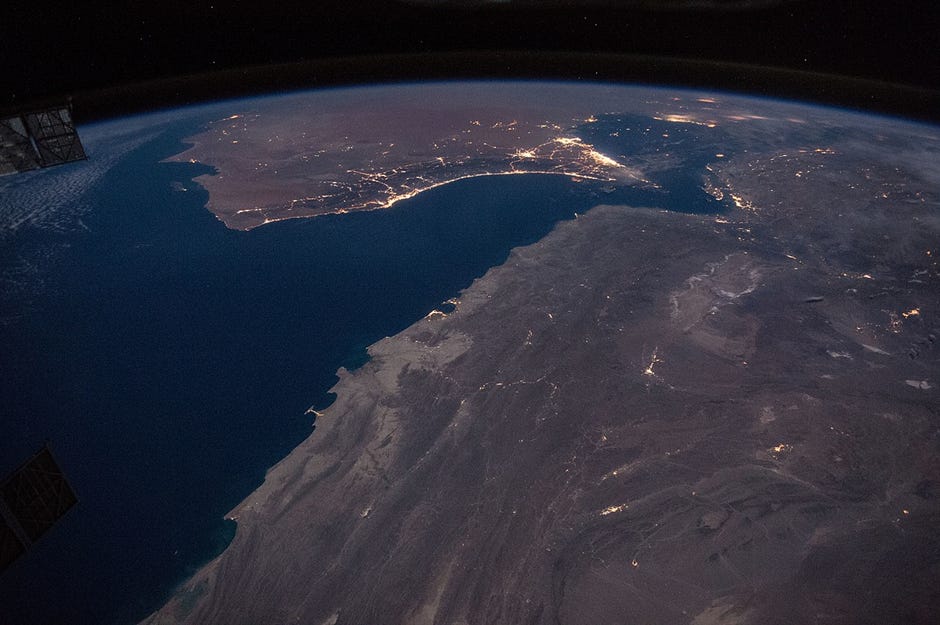
On 28 February 2026, US and Israeli airstrikes on Iran initiated what would become the largest recorded oil supply disruption in history. Within days, Iran’s closure of the Strait of Hormuz — the waterway carrying roughly twenty million barrels per day, approximately one-fifth of global oil supply — had reduced tanker traffic through the strait by ninety-seven percent. Gulf producers including Saudi Arabia, Iraq, Kuwait, Qatar, and the UAE lost access to their primary export route. Saudi Arabia cut production by approximately two million barrels per day, partly due to missile and drone strikes on offshore fields and partly as the consequence of routes becoming impassable. The IEA reported combined Gulf production losses of at least ten million barrels per day, with further reductions threatened if maritime conflict escalated. Iran’s new supreme leader declared that the strait would remain closed for as long as US and Israeli attacks continued.
The immediate market response was swift and severe. Brent crude surged past one hundred dollars per barrel, analysts began modelling scenarios approaching two hundred dollars, and global equity markets fell sharply as inflation fears multiplied across import-dependent economies from Europe to East Asia. Emergency reserve releases from IEA member nations bought time but offered no structural resolution. Naval forces, minehunters, and convoy escorts were mobilised. The language of energy security — long confined to think-tank reports — entered emergency cabinet rooms.
The Hormuz Crisis is not simply an oil shock. It is a civilisational threshold — a forcing event that will test whether the global energy system doubles down on fossil dependency or discovers the structural logic for transformation.
Since mid-March 2026, the situation has evolved in ways that deepen rather than diminish the strategic analysis that follows. The Strait of Hormuz has not been formally closed — it has been converted into a permissioned chokepoint. The IRGC has established a vetting and clearance system requiring vessel operators to submit ownership documentation, cargo manifests, crew lists, and destination data to IRGC-linked intermediaries. Approved vessels transit a designated corridor through Iranian territorial waters near Larak Island. At least two vessels have paid tolls of approximately $2 million per transit, settled in Chinese yuan. Iran's parliament is actively drafting legislation to formalise this arrangement as sovereign law. The insurance market has already formalised it actuarially: Lloyd's of London war-risk premiums now price IRGC clearance status as a material risk-reduction variable, making IRGC permission a de facto prerequisite for commercial insurance coverage on Hormuz transits. The strait is open — but only to those who have passed the vetting, paid the toll, and done so in a currency that bypasses the dollar system. This is not a temporary emergency measure. It is an emerging governance architecture for the world's most critical energy chokepoint, and it materially reshapes the strategic logic of all four scenarios developed in this paper.
As at 27 July 2026, the disruption has broadened rather than resolved. Commercial traffic through the Strait of Hormuz remains severely constrained following renewed US–Iran hostilities, attacks on merchant vessels and the reimposition of a US naval blockade, despite a temporary pause in strikes over the weekend. Fewer than ten commodity vessels a day were reported transiting the strait, far below normal levels, with some ships operating without public tracking signals and others avoiding military-guided passage because of the continuing security risk.¹ Meanwhile, instability has spread to the Red Sea. Houthi attacks on Saudi oil infrastructure and a declared naval blockade have sharply reduced traffic through the Bab el-Mandeb Strait, with only eleven commodity vessels recorded transiting on 26 July.² Together, the simultaneous pressure on Hormuz and Bab el-Mandeb demonstrates how quickly geopolitical conflict at two narrow maritime chokepoints can propagate through global energy, shipping and supply systems.
This is the context in which this paper was written. The scenarios developed here are not retrospective exercises. They are live instruments — tools for thinking clearly about structural uncertainty at a moment when the fog is densest and the stakes are highest.
The Regenerative Transition Scenario Method (RTSM) is a structured foresight process for exploring systemic transitions under conditions of genuine uncertainty. It integrates environmental scanning, the Futures Triangle framework, scenario matrix construction, Causal Layered Analysis, Bussey’s Futures Senses, regenerative transition design, and civilisational cycle reflection. The method produces not just alternative futures but pathways — strategic leverage points, early signals, and experimental interventions that can move a system toward more regenerative outcomes even within unfavourable conditions.
The core foresight question driving this analysis is: How might the global energy system evolve as the current oil crisis reshapes low-carbon futures and structural decoupling from fossil fuels between now and 2040?
The transformational tension underlying that question is persistent but newly urgent: the extractive fossil-fuel system pressing against the early architecture of a regenerative energy system. The Hormuz Crisis has not created that tension. It has simply forced it into the open.